
In the latest episode of Legally Consumed, our hosts were joined by Andrew Janis, Chief Legal Officer at Vow, one of Australia’s most exciting and innovative companies. Vow is an Australian food technology company producing cultured meat, using animal cells to create real meat without the need to raise and slaughter animals.
Through the lens of his role helping the company navigate global legal and regulatory markets, Andrew explains what cultured meat is, how it could help address challenges relating to sustainability and food security, and the opportunities it creates for food innovation. He also discusses the complex regulatory landscape surrounding novel foods and shares insights into what it takes to bring an entirely new category of food to market.
What is cultured meat?
So, you can’t have a conversation about cultured meat without first understanding what it is. While the concept may sound futuristic, the underlying idea is relatively straightforward. At its simplest, cultured meat is real meat produced from animal cells rather than through traditional livestock farming. By cultivating these cells in a controlled environment, producers can create meat products without the need to raise and slaughter animals.
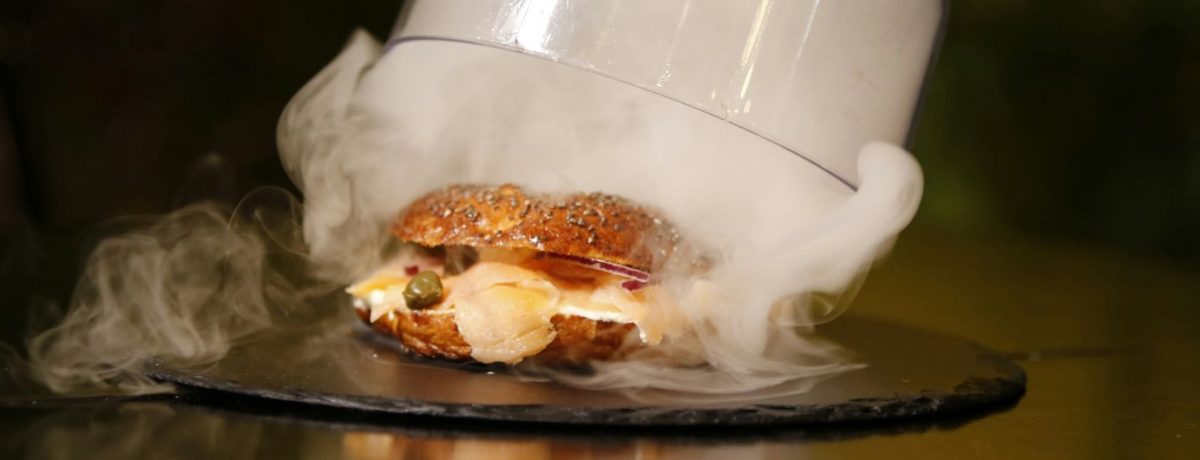
Using this process, Vow’s first product was Japanese quail, but that was only the starting point. Andrew explains that the cells can then be made into a wide range of products, which in turn can be made into dumplings, sandwiches and more. The possibilities are endless. One of the most exciting aspects of the product is its versatility, allowing chefs to experiment with different formats and create their own unique dining experiences. In many ways, the possibilities are limited only by imagination, which is one of the reasons cultured meat is generating significant interest as a new category within the food industry.
For Andrew, one of the most exciting things about Vow was the opportunity to work on a product that is genuinely new to the world, operating in a cutting-edge and rapidly evolving industry.
Sustainability and food security
As the world’s population grows and demand for meat continues to increase, governments and businesses are looking for new food production methods that are both sustainable and resilient. Andrew explains that cultured meat has the potential to become another source of food production, complementing existing agricultural systems rather than replacing them. Alongside other sustainability benefits, cultured meat can be produced locally, reducing reliance on lengthy and energy-intense supply chains, creating additional capacity within the food system. In a world with disrupted and insecure supply chains, food security is becoming an increasingly important consideration, and the ability to produce meat in new ways is attracting attention well beyond the food technology sector.
According to Andrew, food chain stability is one of the biggest reasons governments are taking an interest in cultured meat. Singapore, for example, imports a significant proportion of its food and sees value in technologies that could strengthen domestic food production and reduce reliance on overseas supply chains. While the industry remains in its early stages, Andrew notes that production continues to scale and costs are steadily decreasing. Over time, cultured meat may become less of a novelty and more of another option available to consumers, helping support a more diverse and resilient food system.
Navigating a new regulatory landscape
Innovation often moves faster than regulation, and cultured meat is no exception. Andrew explains that one of Vow’s biggest challenges is that existing food regulations aren’t designed for products like this. Many of the rules governing meat production are based on traditional farming and slaughterhouse processes, making them difficult to apply to a cultured meat facility. As Andrew puts it, when regulators try to apply laws design for the livestock industry to cultured meat production, “nothing fits”.
For Vow, obtaining regulatory approval was a critical milestone because without it, even the most innovative product cannot reach consumers. Andrew notes that approvals can take years and are often one of the first considerations when assessing new markets to enter. Beyond population size and consumer demand, Vow looks closely at whether governments have clear pathways for assessing cultured meat products and the expertise needed to evaluate them. As more novel products enter the market, the cultured meat industry highlights a challenge that regulators across many sectors increasingly face: how do you assess innovations that do not fit neatly within existing rules?
Get in touch
To hear more from Andrew Janis, tune into our podcast, Legally Consumed, where we interview leaders across the spectrum of consumer products. Keep up to date with new podcast episodes by following us on Apple Podcasts, YouTube Music or Spotify.
LinkedIn: https://www.linkedin.com/company/cie-legal/
Email: info@cielegal.com.au